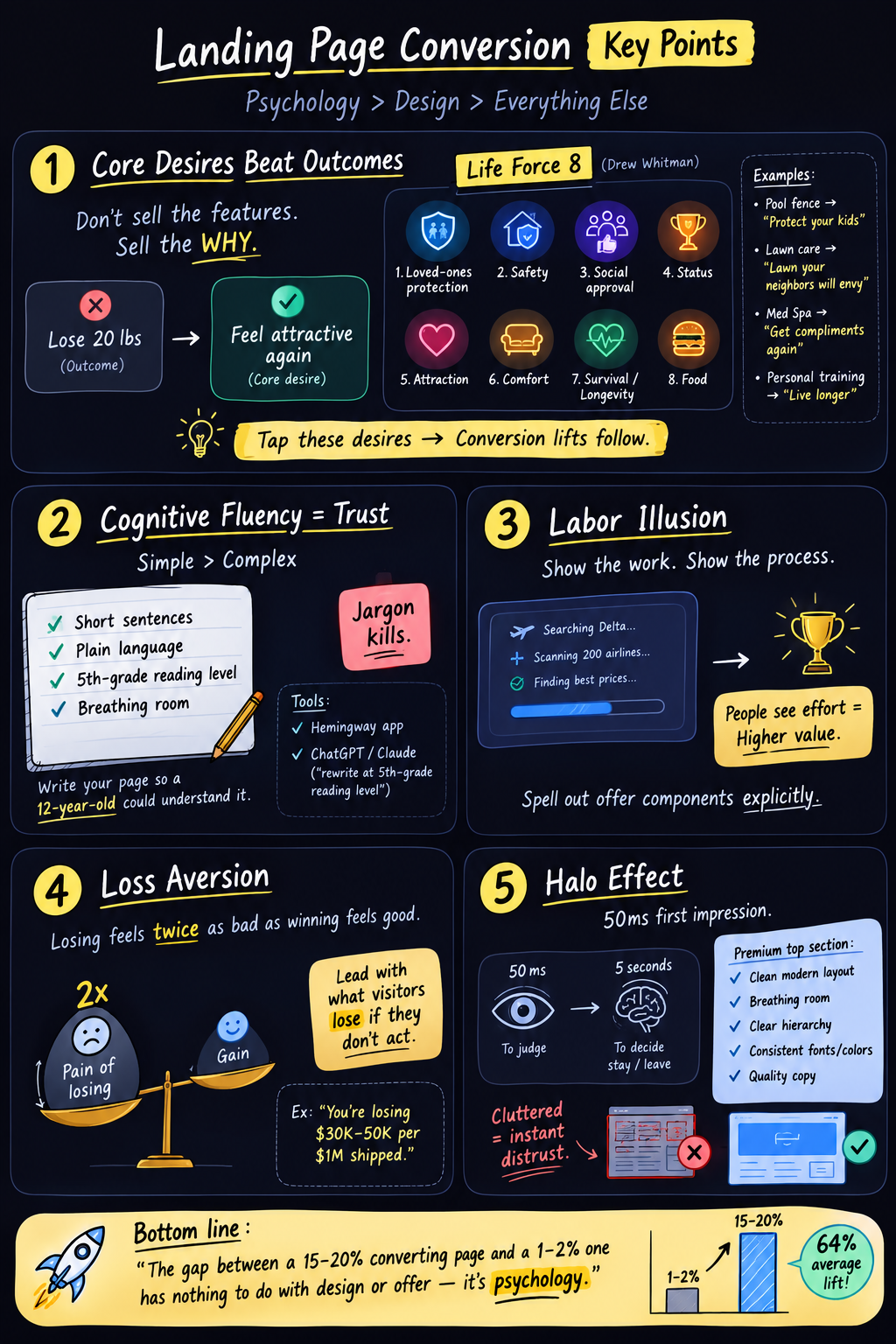
The gap between a landing page converting at 15% and one converting at 2% is rarely design or offer. Five psychological principles decide it, each backed by research.
Claude Code becomes valuable for founders when it stops acting like a clever chat window and starts operating as a context-aware chief of staff for updates, prep, follow-ups, and decision flow.
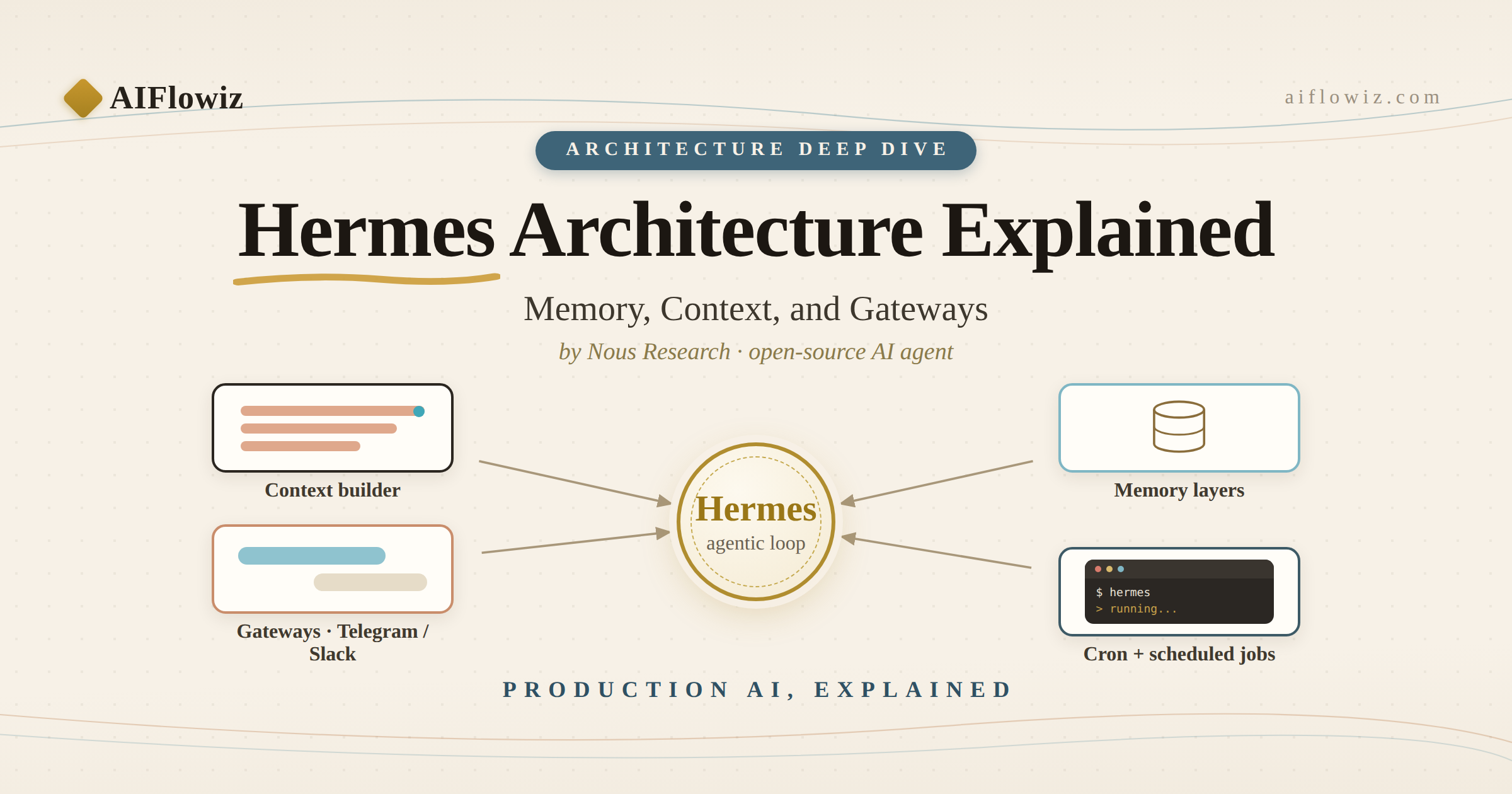
Hermes is more than a chatbot wrapper. This walkthrough explains the agentic loop, context-building system, memory layers, messaging gateway, and cron architecture that make Hermes usable for real operator workflows.
Voice AI creates value when it protects the moment of buyer intent. The real system answers, qualifies, books, updates the CRM, and escalates when humans need to take over.
AI workflow automation is moving from simple triggers to agentic decisions. The businesses that win will add approval gates, logs, and exception queues before giving AI real authority.
Hermes becomes useful when it stops being a chatbot and starts acting as an operating layer across models, tools, messaging, and automation. This guide shows how to set it up on desktop, connect local and cloud LLMs, isolate profiles, wire messaging, and launch one practical workflow that a business can actually use.
Claims intake is not an OCR problem. Document AI creates ROI when it extracts, validates, routes, and turns messy claim packets into trusted case records.
Incident response breaks when alerts turn into unowned Slack chaos. AI triage agents can gather context, route approvals, and create audit trails without taking unsafe production actions.
Email triage is where revenue work quietly stalls: new leads, support escalations, vendor requests, invoices, renewals, and customer risks sit in shared inboxes without ownership. AI agents help when they classify, enrich, route, and escalate with clear approval boundaries.
Private LLMs are not about running a smaller chatbot in a closet. They are about creating an AI boundary where sensitive prompts, documents, retrieval, logs, and approvals stay under business control.
Contract AI should not stop at OCR or summaries. The real value is extracting clauses, dates, obligations, and approvals into validated business records that legal, finance, and operations can trust.
AI workflow automation works when the model is inside a controlled system: triggers, validation, approval gates, retries, logs, and clear ownership. Here is how to turn manual handoffs into production automation without creating operational debt.
A RAG chatbot is valuable when it controls retrieval, captures intent, escalates clearly, and turns repeated questions into operational insight. The handoff is where the system proves itself.
Voice AI appointment booking is not about replacing receptionists. It protects revenue by turning calls into qualified bookings, CRM updates, confirmations, and clean human handoffs.
Invoice automation fails when extraction is treated as the finish line. Document AI becomes valuable when it validates invoices against purchase orders, receipts, approvals, and exception rules before data reaches finance systems.
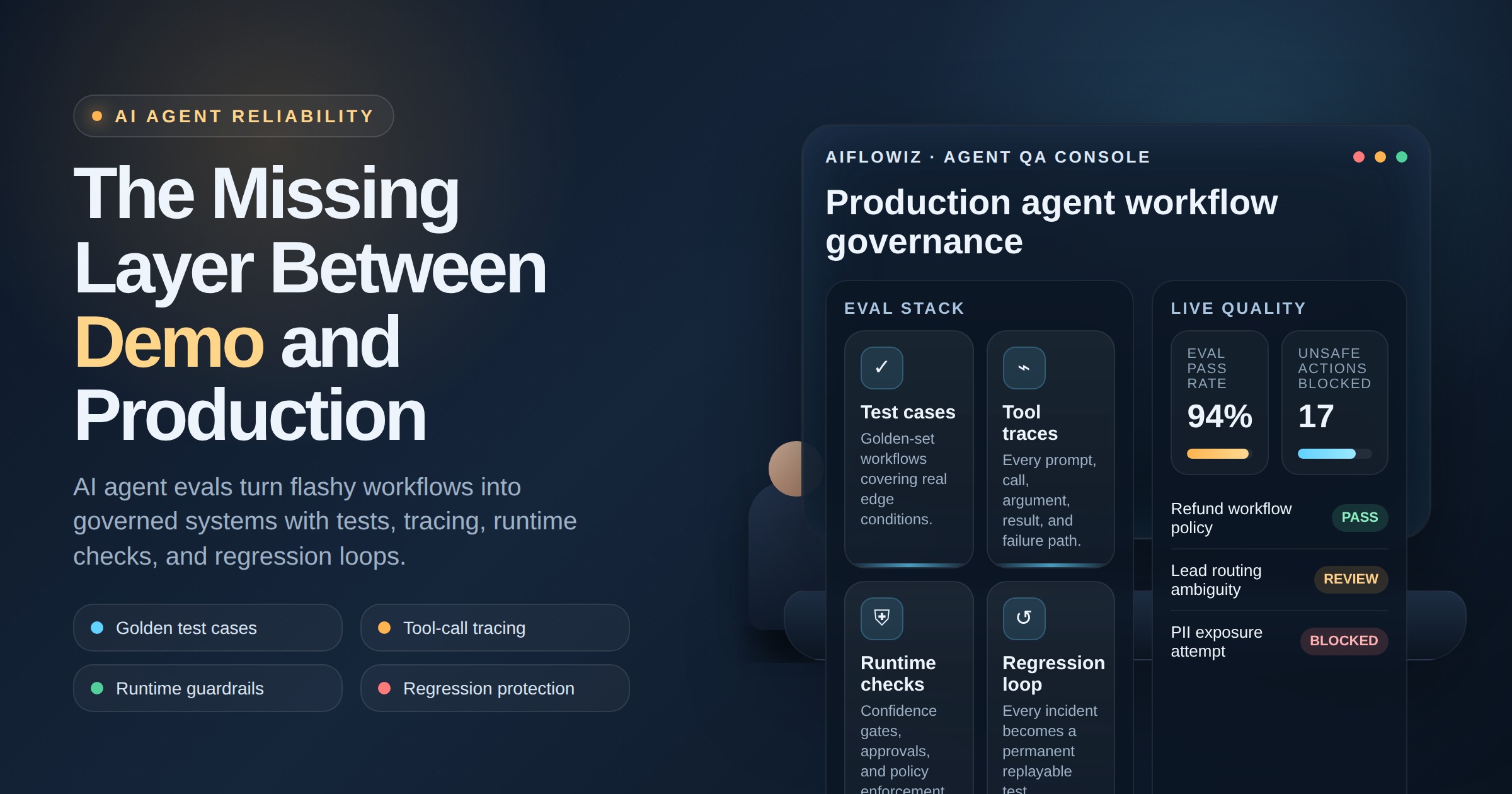
AI agents fail quietly when nobody can see which tool they used, why they acted, or where the cost came from. Production observability turns agent behavior into traces, evals, alerts, and rollback paths operators can trust.
A support chatbot is risky when it answers policy-sensitive questions without knowing the boundary. The production win is grounded retrieval plus controlled human handoff.
AI agents only become useful when they can act across real tools. The operating challenge is giving teams speed without creating shadow AI, uncontrolled permissions, or cleanup work.
AI data entry automation is not about typing faster. The real win is turning inboxes, forms, spreadsheets, and CRMs into controlled handoffs with validation, ownership, and exception routing.
Factories, field teams, and operations groups want AI vision, but their images often contain sensitive facilities, products, defects, and customer data. The winning system keeps data controlled while routing exceptions humans can trust.
AI imaging does not create value just by producing another scan or model output. Clinics need workflows that collect context, route requests, escalate exceptions, and keep clinicians in control.
Procurement AI is valuable when it prepares the purchase, checks the policy, gathers the documents, and routes the approval. It becomes dangerous when it spends money without boundaries.
Healthcare AI should not start by making diagnoses. The safer commercial win is automating intake, referral routing, imaging requests, follow-up, and exception handoffs while clinicians stay in control.
AI systems need more than prompts before they touch real operations. This guide explains the evals, monitoring, cost controls, and guardrails leaders should require.
Document AI is not OCR with a nicer interface. In healthcare, finance, and regulated operations, the value comes from validation, exception routing, approvals, and audit-ready records.
Long-context coding agents can inspect more of your system, but they still need boundaries, evals, logs, and human handoffs. The workflow around the model determines whether speed becomes leverage or operational debt.
AI workflow automation fails when the happy path is automated but the exception path is left in Slack, email, or someone’s memory. n8n works best when every handoff has an owner, log, and approval rule.
Private AI is not automatically safer, and frontier APIs are not automatically reckless. The real decision is where sensitive data, tool access, approvals, and audit logs belong in the workflow.
Vendor onboarding is not just document capture. Document AI should extract, validate, route, approve, and create trusted supplier records without hiding risk in email threads.
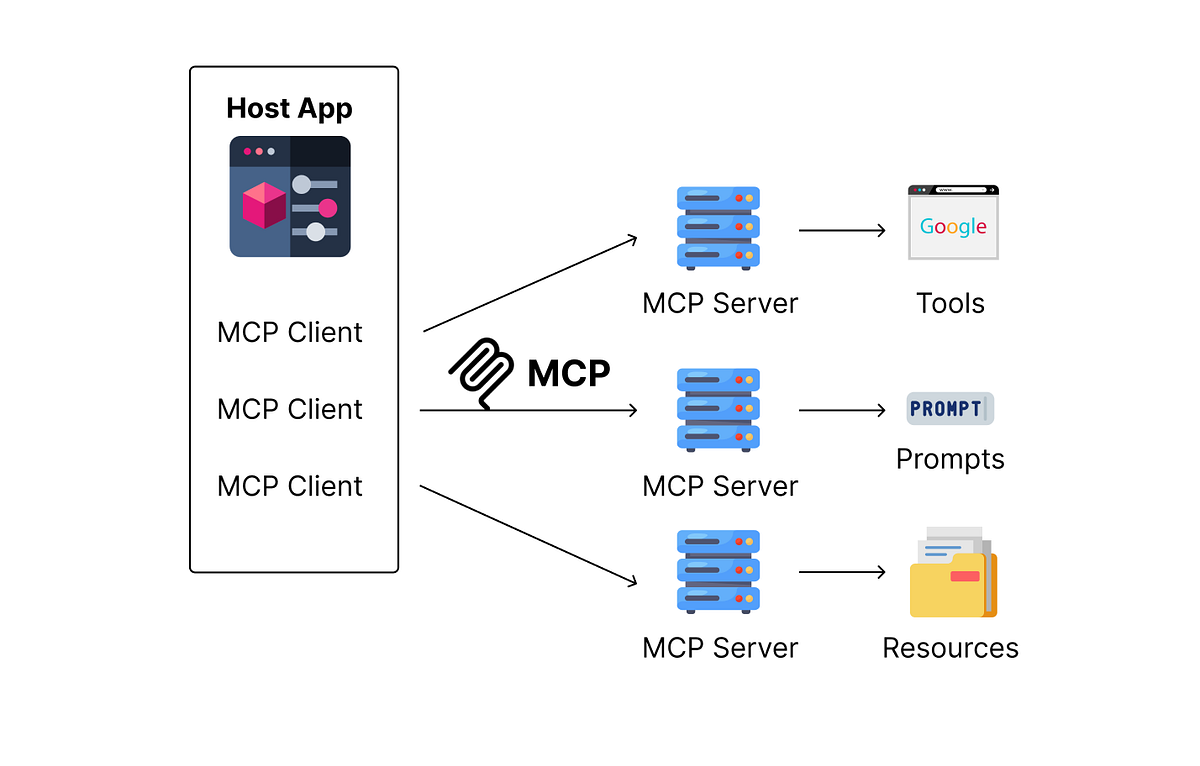
MCP-style tool access makes AI agents easier to connect, but production value depends on permissions, approvals, logs, and rollback. Build the control layer before agents touch real business systems.
Onboarding breaks when documents arrive faster than operations can validate them. Document AI turns applications, IDs, forms, and supporting files into trusted workflow data.
Most website chatbots fail after the first answer. A production RAG chatbot should qualify intent, protect source truth, and hand good opportunities to sales with context.
AI governance only works when policies become executable controls. This guide shows how to build access boundaries, approval gates, audit logs, and evals into production AI workflows.
AI agent spend gets out of control when budgets are not designed into the workflow. Learn how model routing, tool limits, approvals, and telemetry turn agents into measurable business systems.
AI inbox automation should not just draft faster replies. The real value is classifying, routing, escalating, and logging messages before leads and support issues fall through the cracks.
Invoice automation fails when OCR output becomes financial data without validation. A production Document AI workflow extracts, checks, routes, and posts invoices with controlled exceptions.
Most of the market sees bigger context windows, stronger benchmarks, and smarter AI agents. Smart operators see the harder truth: if the workflow is messy, a better model does not fix it — it scales the mess faster.
Document AI for contracts should extract obligations, validate renewal dates, route exceptions, and create trusted operational records—not just summarize PDFs.
Local and private LLMs protect sensitive data only when the deployment includes routing, access control, evals, cost limits, and operational ownership.
Extraction is easy. The hard part is deciding when a document is safe to auto-post. Use field-level thresholds, validation rules, and exception queues.
Voice AI is not a receptionist replacement. It is an intake SLA: answers after hours, captures intent, books when possible, and escalates when it must.
Most RAG teams measure answer quality and miss the operational metric that matters: safe resolution. Build evals that score retrieval, permissioning, and handoff quality.
Voice AI is not about replacing receptionists. It is about protecting revenue from missed intake moments with qualification, booking, CRM updates, reminders, and human escalation.
A RAG chatbot is not useful because it answers questions. It becomes valuable when it captures intent, uses trusted sources, and hands off the right conversation at the right time.
AI agents create value when they take bounded actions between teams, systems, and approvals. Here is how to automate workflow handoffs without turning exceptions into operational debt.
Your n8n plus AI automation does not fail because the happy path is slow. It fails when volume spikes, APIs throttle, and retries become a retry storm. Here is the production pattern.
Finance and ops do not need extracted text. They need defensible records. This is the blueprint: evidence packs, validations, and owned exception queues.
Prompt injection is not a “model problem.” It is a workflow boundary problem. Here’s how to harden RAG chatbots with retrieval contracts, safe rendering, and controlled tool access.
Voice AI intake is a revenue lever—but only if you treat consent, PII, and escalation as system requirements. Here’s the guardrail stack that keeps Voice AI shippable.
Voice AI is not just for answering missed calls. Reminder and confirmation loops protect revenue after the booking by reducing no-shows and triggering human follow-up when needed.
A RAG chatbot becomes useful when it can answer account-specific questions safely, respect permissions, and hand off unresolved cases with full context.
AI automations do not fail because the happy path is slow. They fail when exceptions disappear. Dead-letter queues give n8n workflows a controlled place for retries, ownership, and recovery.
Document AI can help finance teams match remittances, invoices, deductions, and payment records when extraction is paired with validation and exception routing.
Document AI is not finished when fields are extracted. Production systems need data contracts, validation rules, exception routing, and audit-ready records.
n8n plus AI can triage messy shared inboxes, classify requests, route exceptions, create tasks, and give operators one owned queue instead of scattered manual work.
A useful RAG chatbot does more than answer FAQs. It qualifies buyer intent, respects knowledge boundaries, captures leads, and hands off high-value conversations.
Document AI for invoice operations should extract, validate, match, route exceptions, and create audit-ready finance records before payments move forward.
Voice AI callback loops protect revenue after missed calls by qualifying prospects, booking appointments, updating CRM records, and escalating edge cases to humans.
Production n8n AI workflows need idempotency keys, retry controls, logs, approval gates, and rollback paths so duplicate events do not corrupt CRM, finance, or support operations.
Voice AI intake only works when every call has outcome QA: qualification checks, booking validation, CRM updates, escalation rules, and revenue attribution.
AI agents create operational leverage when they own bounded handoffs, approval gates, logs, and rollback paths instead of acting like uncontrolled coworkers.
Production AI agents need incident playbooks: evals, traces, rollback paths, owner alerts, cost caps, and human review when automated actions go wrong.
Vendor onboarding needs more than OCR. Document AI should extract, validate, route exceptions, and create trusted supplier records before finance or ops depends on them.
n8n AI workflows create value when webhooks, retries, idempotency, exception queues, and ownership rules protect the process after the happy path breaks.
AI agents create business leverage when memory is scoped, observable, and reversible instead of becoming a hidden source of bad decisions across workflows.
Document AI creates operational ROI when extraction is paired with validation, exception routing, approvals, audit logs, and trusted records for finance and operations teams.
Voice AI appointment systems create value when missed calls become qualified bookings with QA, escalation, CRM updates, and monitoring built into the workflow.
RAG chatbots need retrieval boundaries, access control, source visibility, human handoff, and analytics before they touch customer or internal knowledge workflows.
AI agents can remove CRM admin work, but only if updates are bounded, reviewed, logged, and tied to pipeline hygiene rules instead of free-form autonomy.
AI agents create real value when they reduce manual handoffs with bounded permissions, approval gates, logs, rollback paths, and measurable workflow outcomes.
A RAG chatbot is only valuable when teams can measure answer quality, retrieval gaps, lead capture, escalation, and the workflow after the conversation.
Invoice automation is not just OCR. Document AI creates value when it extracts, validates, reconciles, routes exceptions, and produces trusted finance records.
Most RAG chatbot failures come from stale or poorly governed knowledge, not weak prompts. Freshness pipelines make support and sales chatbots trustworthy.
Contract intake breaks when teams copy clauses, dates, renewal terms, and obligations by hand. Document AI can extract, validate, route, and hand off contract data safely.
AI agents create leverage only when their actions are bounded, observable, and reversible. Approval gates turn risky autonomy into controlled workflow execution.
CRM automation fails when it only syncs fields and ignores judgment-heavy follow-up. n8n plus AI can classify leads, enrich records, draft next steps, and escalate exceptions without losing control.
OCR is only the first step in document-heavy onboarding. The real business value comes from extraction, validation, exception routing, and audit-ready records that operations teams can trust.
Regulated teams do not need to choose between AI adoption and data control. Private RAG and local LLM deployments can deliver useful automation while keeping sensitive workflows inside clear security boundaries.
AI agents create value when they remove the dead space between teams, tools, and approvals. The win is not full autonomy; it is controlled handoff automation with clear boundaries, logs, and human escalation.
A useful RAG chatbot does more than answer questions from documents. It captures intent, recommends next steps, escalates risky conversations, and turns support traffic into qualified pipeline.
Missed calls are missed revenue when intake depends on humans being available. A Voice AI appointment agent can qualify, schedule, remind, and escalate without pretending every call is safe to automate.
Invoice automation is not just OCR. The real value comes from extraction, validation, exception routing, and writeback into the finance systems your team already uses.
Most workflow automation fails at the exception, not the happy path. This guide shows how to build n8n + AI systems that route messy work, ask for approval, and keep operations moving.
Voice AI appointment agents can answer calls, qualify leads, book time, and update the CRM. The winning build is not a talking bot; it is a guarded intake workflow with escalation.
Invoice automation only works when extraction, validation, and exception routing are designed together. Document AI can reduce AP copy-paste while keeping finance teams in control of risky cases.
Manual operations work hides inside inboxes, spreadsheets, and handoff messages. An n8n + AI sprint turns one painful workflow into a measured production automation in days, not months.
Production agents fail quietly unless teams measure tool use, outputs, costs, and handoffs. AI Ops turns agents from clever demos into governed systems the business can trust.
Voice AI can qualify callers, book appointments, and update systems after hours. The difference between a useful agent and a brand risk is workflow design, escalation, and measurement.
Invoice teams do not need another dashboard; they need fewer manual touches. This build plan shows how Document AI can extract, validate, and route invoices with human review where it matters.
Most companies pick AI projects backwards: they start with a model instead of a bottleneck. This guide shows how to choose one workflow that can ship fast, prove ROI, and become the foundation for a larger AI system.
Today’s strongest AI signal is practical: agents, RAG, voice, and n8n workflows are moving into real business operations. The opportunity is to turn one painful manual process into a measured AI system.
Today’s tech signal is clear: AI agents are moving from demos into real developer workflows, while token leaks, supply-chain attacks, and exposed admin planes are becoming the fastest way teams get burned.